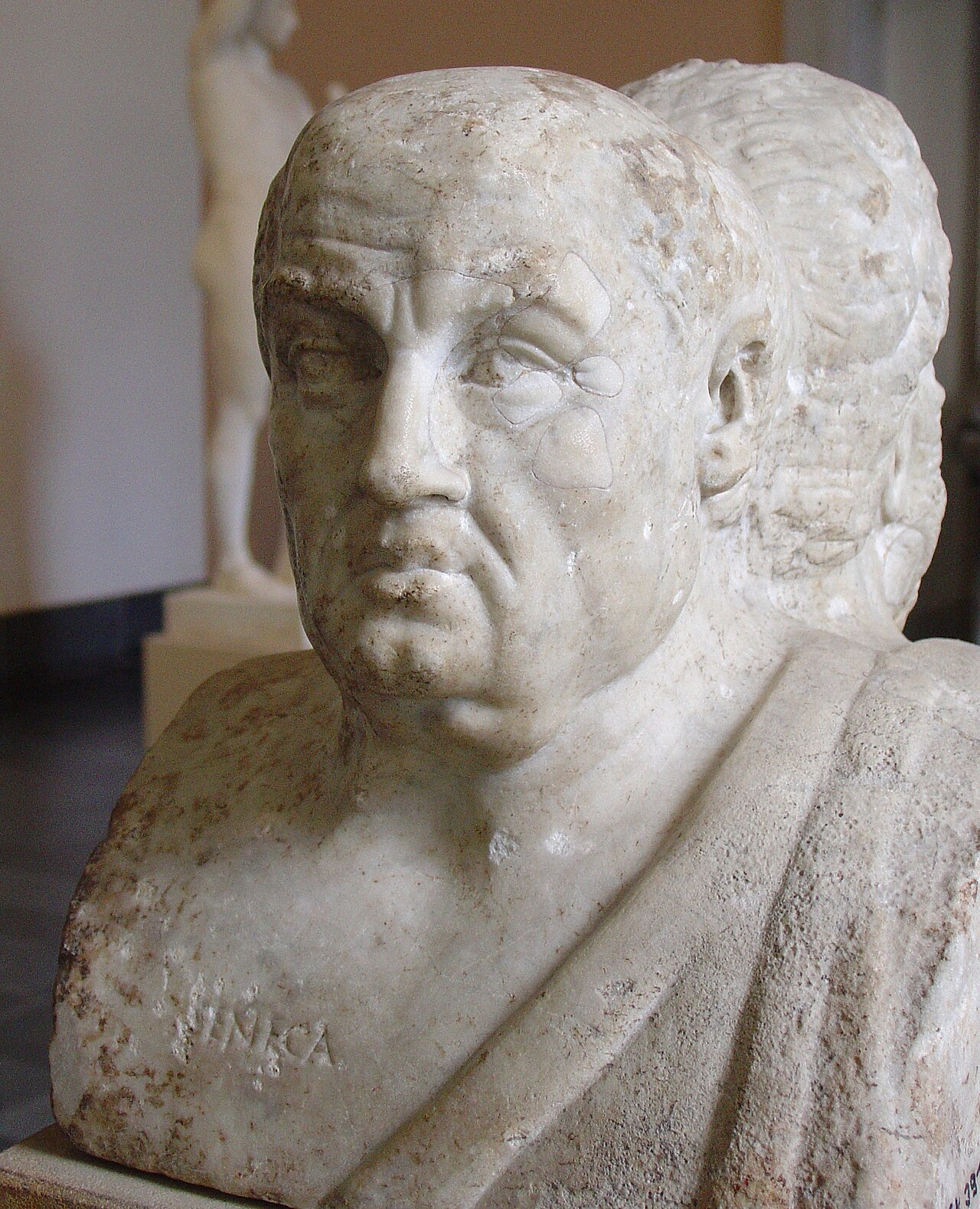
The Wealth of Seneca: How a Stoic Became Roman Empire's Richest
The name Seneca often conjures images of ancient wisdom, profound philosophy, and stoic resolve. Yet, for many, a lesser-known facet of his extraordinary life sparks an intriguing paradox: how did one of antiquity's most celebrated Stoic philosophers also become one of the wealthiest men in the vast Roman Empire? This question, far from being a mere historical footnote, delves into the very core of what it meant to live a principled life amidst the allure and dangers of immense power and fortune. While modern searches might sometimes conflate different public figures, particularly those like "Seneca Wallace net worth" related to contemporary individuals, this article focuses squarely on the phenomenal financial journey of Lucius Annaeus Seneca, the Roman philosopher, statesman, and playwright. His story offers invaluable insights into the complexities of ambition, virtue, and wealth in an era both distant and remarkably relevant to our own.
The Paradox of a Prosperous Philosopher
The common caricature of a philosopher often involves asceticism, detachment from material possessions, and a general disdain for worldly riches. Indeed, many philosophical traditions, including Stoicism, emphasize inner tranquility and virtue over external goods. This makes Seneca's incredible wealth, estimated to be among the largest in the Roman world, a subject of enduring fascination and debate. Was he a hypocrite, abandoning his principles for personal gain? Or did he embody a more nuanced understanding of Stoicism, demonstrating that wealth, like any other external circumstance, could be managed and even utilized in accordance with virtue?
The ancient Greek philosopher Thales of Miletus, often cited by thinkers like Nassim Taleb, famously demonstrated that a philosopher's pursuit of wisdom didn't preclude practical success. Thales, weary of jokes about philosophers being unable to succeed in worldly affairs, once made a fortune by cornering the olive press market. This act wasn't about greed, but about proving a point: that the inability to acquire wealth does not define a philosopher, nor does the acquisition of it necessarily compromise one's philosophical pursuits. Seneca, in a much grander and more complex manner, presented a similar challenge to conventional wisdom, forcing us to consider if one can be both immensely rich and deeply philosophical.
From Spanish Roots to Roman Power Broker
Lucius Annaeus Seneca's journey began over 2,000 years ago in Corduba, southern Spain. Born into an affluent equestrian family, he was the son of Seneca the Elder, a well-known rhetorician. His early education in Rome exposed him to various philosophical schools, but it was Stoicism, under the guidance of teachers like Attalus, that truly resonated with him. Seneca harbored a profound admiration for figures like Cato the Younger, whose unyielding integrity he frequently referenced in his writings.
His intellectual prowess quickly propelled him into a career in Roman politics. He became a distinguished orator and high-ranking financial clerk, ascending through the ranks of the Senate. During this period, he also began writing his prolific body of work, including philosophical essays and influential tragedies.
However, Seneca's life took a dramatic turn in 41 A.D. when Emperor Claudius exiled him to the remote island of Corsica. The charge was alleged adultery with Julia Livilla, the emperor's niece and sister of the notorious Caligula. For eight arduous years, Seneca endured exile, a period during which he honed his philosophical resilience, writing his profound *Consolationes*—letters aimed at comforting himself and others through hardship.
In a twist of fate, Agrippina the Younger, Claudius's ambitious wife and mother of the future emperor Nero, secured Seneca's return in 49 A.D. Her objective was clear: she needed an intelligent, influential tutor and advisor for her young son. This appointment marked the beginning of Seneca's most influential, and ultimately most perilous, chapter.
The Riches Under Nero: A Golden, Yet Perilous, Era
It was during his service as Nero's tutor and principal advisor that Seneca's fortune swelled to astronomical proportions. Estimates suggest his net worth could have been the equivalent of hundreds of millions, possibly even billions, in modern currency, making him arguably the richest man in the Roman Empire at one point. His wealth flowed from various sources: generous imperial gifts, shrewd investments in land and commerce across the provinces, and leveraging his immense political influence for financial gain through interest-bearing loans. His proximity to imperial power opened doors to unparalleled opportunities for wealth accumulation, making him a central figure in the financial landscape of Rome. To delve deeper into the specific ways his fortune grew, you might consider
Seneca's Riches: Unpacking the Philosopher's Fortune Under Nero.
However, such immense wealth tied to political favor was a double-edged sword. While it brought comfort and influence, it also came with inherent risks. As Nero matured and descended into tyranny, the relationship between emperor and advisor became increasingly strained. Seneca, who had once held significant sway, found himself in a precarious position, his wealth and influence making him a target.
Ultimately, Seneca's end came in 65 A.D. by order of Nero himself. Accused, likely falsely, of involvement in the Pisonian conspiracy to assassinate the emperor, Seneca was forced to commit suicide. His death underscored the volatile nature of imperial patronage and the ultimate fragility of even the greatest fortunes when confronted by absolute power.
Seneca's Stoicism: Reconciling Wealth and Wisdom
Despite his vast fortune and involvement in the cutthroat world of Roman politics, Stoicism remained a constant anchor in Seneca's life and philosophy. For Seneca, wealth was an *adiaphoron* – an "indifferent thing." It was not inherently good or bad; its value lay entirely in how it was used. A Stoic, he argued, could possess wealth without being possessed by it. The true danger lay not in having riches, but in developing an attachment to them, allowing them to dictate one's actions or disturb one's inner peace.
Seneca advocated for a healthy detachment from material possessions. He saw wealth as a tool that could facilitate virtue, allowing one to practice generosity, support others, and provide for one's leisure to pursue philosophy. He famously advised practicing voluntary poverty, occasionally living as if one were poor, to steel the mind against the vicissitudes of fortune and to appreciate what one had.
His writings, particularly his *Moral Letters to Lucilius*, are replete with reflections on the proper management of wealth and the pursuit of true happiness, which he consistently argued came from within, independent of external circumstances. He borrowed liberally from other philosophical schools, demonstrating an intellectual breadth that transcended rigid doctrinaire adherence. His sophisticated approach to wealth and life continues to inspire thinkers today, from historical figures like Erasmus and Montaigne to contemporary best-selling authors like Nassim Taleb, who sees in Seneca a pragmatic genius navigating uncertainty. For a broader view of this paradox, refer to
Exploring Seneca's Net Worth: A Roman Philosopher's Paradoxical Wealth.
Lessons from Seneca's Financial Philosophy
Seneca's life offers profound practical wisdom applicable even today:
*
Wealth as a Tool, Not a Master: Understand that money is a means to an end, not the end itself. Its purpose is to facilitate a life of virtue and freedom, not to become a source of anxiety or an object of worship.
*
Cultivate Inner Resilience: External fortunes are fleeting. True security and happiness come from developing an inner fortress of character that is immune to the ups and downs of the market or political climate.
*
Practice Detachment: Regularly reflect on the transient nature of possessions. Engage in "premeditation of evils" by imagining the loss of your wealth, not to induce fear, but to build mental fortitude and appreciate what you currently have without clinging to it.
*
Embrace Prudence and Generosity: While Seneca was rich, his philosophy suggested using wealth wisely – for charitable acts, supporting worthy causes, and living comfortably without ostentation.
*
Beware the Chains of Ambition: Seneca's rise and fall under Nero vividly illustrates the dangers of unchecked ambition and the precariousness of power-derived wealth. Understand that proximity to power, while potentially lucrative, often comes at a high personal cost.
Conclusion
Lucius Annaeus Seneca remains one of antiquity's most complex and compelling figures. A brilliant philosopher, a shrewd statesman, and an immensely wealthy man, his life challenges simplistic notions of what it means to live a virtuous existence. He proved that one could accumulate vast riches and still be a profound proponent of Stoicism, so long as the wealth did not corrupt the soul or become the ultimate pursuit. His eventual tragic demise under Nero's tyranny serves as a powerful reminder of the ephemeral nature of external fortune and the enduring importance of inner strength. Seneca's wealth, therefore, is not just a historical curiosity; it is a critical lens through which we can explore the perennial human struggle to reconcile ambition, prosperity, and the pursuit of a meaningful, principled life.